


How is Thyroid Nodule Diagnosed?
How is Thyroid Nodule Diagnosed?
Thyroid nodules are small masses that usually form in the thyroid gland and, although they are often benign, they require a careful diagnostic process. Diagnosis of thyroid nodules is carried out in stages and the most commonly used methods range from physical examination to advanced imaging techniques. Here are the details of the thyroid nodule diagnosis process:
Physical Examination (Palpation)
The first step in diagnosing a thyroid nodule is a physical examination. When the patient comes to the doctor’s examination, the thyroid gland is palpated in the front of the neck. During this examination, the patient is asked to swallow because the thyroid gland moves during swallowing and the doctor can better understand the structure of the gland during this movement. The doctor assesses the consistency of the thyroid gland, whether it is rough or smooth and the presence of swelling.
Signs of Scepticism
Sometimes a nodule may not be palpable on physical examination. However, if the patient has certain symptoms, the doctor may suspect further investigations. These symptoms include the following:
- Feeling of pressure in the neck
- Difficulty breathing
- Hoarseness
Such complaints may indicate the presence of a thyroid nodule and require further investigations.
Imaging Methods (Thyroid Ultrasound)
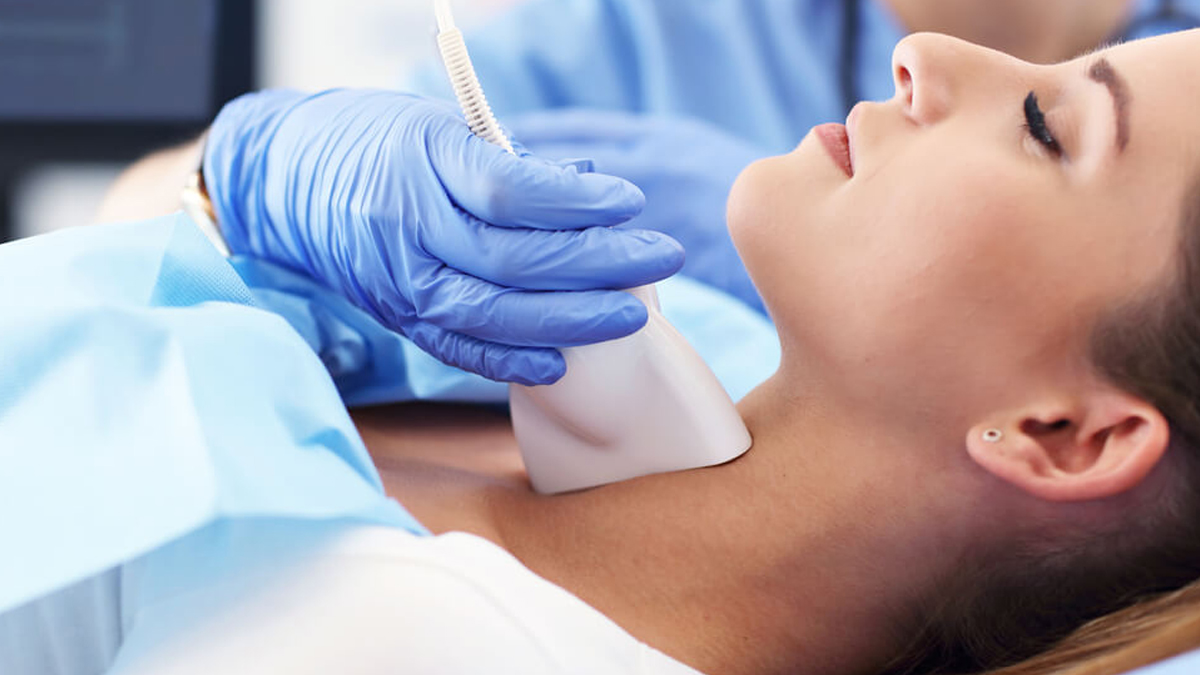
The most commonly used imaging method for the evaluation of the thyroid gland is ultrasound. Ultrasound examines the structure of the thyroid gland in detail with the help of sound waves. Even irregularities as small as one tenth of a millimetre can be detected with this method. The presence of nodules in the thyroid gland, their structure, size and possible dangerous signs (e.g. calcifications) are observed by ultrasound. Ultrasound provides important clues to determine whether thyroid nodules are benign or malignant.
Blood Tests
During the diagnosis of thyroid nodules, blood tests are performed to assess the function of the thyroid gland. These tests help to determine whether the thyroid gland is overactive (hyperthyroidism) or underactive (hypothyroidism). Conditions such as thyroiditis (inflammation of the thyroid) can also be diagnosed with blood tests.
Thyroid Fine Needle Aspiration Biopsy (FNAB)
If the presence of a nodule is confirmed after ultrasound and blood tests, but the nature of the nodule is not completely clear, the doctor will usually perform a fine needle aspiration biopsy (FNAB). In this procedure, a sample is taken from inside the nodule with a fine needle. The tissue sample is subjected to pathological examination in the laboratory. This examination determines whether the nodule is benign or malignant. A treatment plan is made according to the biopsy result.
Definitive Diagnosis and Treatment
The diagnosis of a thyroid nodule is determined by a biopsy. If the nodule is malignant, surgical intervention may be required. Pathological examination of the nodule removed after thyroid surgery provides a definitive diagnosis of the disease and the treatment process is directed accordingly.
Stages of Thyroid Nodule Diagnosis
The general stages of thyroid nodule diagnosis are as follows:
- Physical examination of the thyroid gland
- Imaging with ultrasound
- Evaluation of thyroid function with blood tests
- Fine needle aspiration biopsy (FNAB), if necessary
Related posts