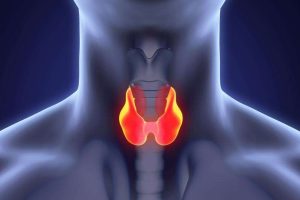


Aufbau und Funktion der Schilddrüse
The thyroid gland is a small gland located in the front of the neck, just below the cartilage known as the Adam’s apple and in front of the windpipe. This butterfly-shaped gland weighs about 15-20 grams and produces the hormones T3 (triiodothyronine) and T4 (thyroxine), which are vital for regulating the body’s metabolism. These hormones affect the function of almost all cells in the body and control the rate of metabolism.
Metabolism is the process of converting the food we take in into energy and burning this energy as calories. Thyroid hormones balance the body’s energy production and consumption, ensuring that it functions correctly. If thyroid hormones are insufficient, metabolism slows down, which can lead to weight gain, fatigue and other symptoms. On the contrary, overproduction of the hormones causes the metabolism to speed up excessively.
Functions of Thyroid Hormones
Thyroid hormones have important functions that affect almost every organ of the body:
- Development of intellectual functions: Thyroid hormones support brain development and mental functions.
- Brain and nervous system development: Essential for healthy development and function of the brain and nervous system.
- Skeletal system development: Provides the development of tissues such as bone, cartilage and skin.
- Heart function: Supports cardiovascular health by increasing the contractile strength and speed of the heart.
- Oxygen consumption: Regulates the capacity of body tissues to use oxygen.
- Heat production: Provides heat production in cold weather by regulating body temperature.
- Blood fats: Contributes to the stabilisation of cholesterol and other blood fats.
- Carbohydrate metabolism: Provides the conversion of carbohydrates into energy.
- Appetite and body weight: Thyroid hormones regulate appetite and control body weight.
Thyroid Gland Diseases
Thyroid gland diseases are divided into two main categories: functional and structural disorders:

Dysfunctions of the Thyroid Gland
- Hypothyroidism: It is a condition in which the thyroid gland secretes less hormone than normal. Symptoms such as slow metabolism, weight gain, fatigue and cold sensitivity are observed.
- Hyperthyroidism (Toxic Goitre): It is the excessive hormone secretion of the thyroid gland. In this case, metabolism accelerates, symptoms such as weight loss, palpitations, nervousness and sweating occur.
- Euthyroidism: The thyroid gland’s hormone production is normal. However, structural problems may be present
Structural Disorders of the Thyroid Gland
- Goitre: It is a general enlargement of the thyroid gland. The growth is caused by the thyroid spreading evenly.
- Nodüler Guatr: Tiroid bezi içinde yumrular (nodüller) oluşursa bu duruma nodüler guatr denir. Nodüller, tek ya da çok sayıda olabilir.
- Thyroid Nodule: They are masses that are formed as a result of clustering of cells in the thyroid gland and have a different density from their surroundings. Nodules are usually benign, but in some cases may carry a risk of cancer.
- Schilddrüsenentzündung: Es handelt sich um eine Entzündung der Schilddrüse. Sie kann sich als Folge eines Angriffs des Immunsystems auf das Schilddrüsengewebe entwickeln.
- Schilddrüsenkrebs: Bösartige (maligne) Tumore, die durch abnorme Zellvermehrung in der Schilddrüse entstehen.
Schlussfolgerung
Die Funktionen der Schilddrüse haben einen erheblichen Einfluss auf die allgemeine Gesundheit des Körpers. Störungen in der Produktion von Schilddrüsenhormonen können durch Beeinträchtigung des Stoffwechsels zu ernsthaften Gesundheitsproblemen führen. Daher ist eine frühzeitige Diagnose und Behandlung von Schilddrüsenerkrankungen entscheidend für die Erhaltung eines gesunden Lebens. Besteht der Verdacht auf eine Schilddrüsenfehlfunktion, sollte ein Arzt konsultiert werden.
Verwandte Artikel